Project
Lockdown Diet, 2020-ongoing
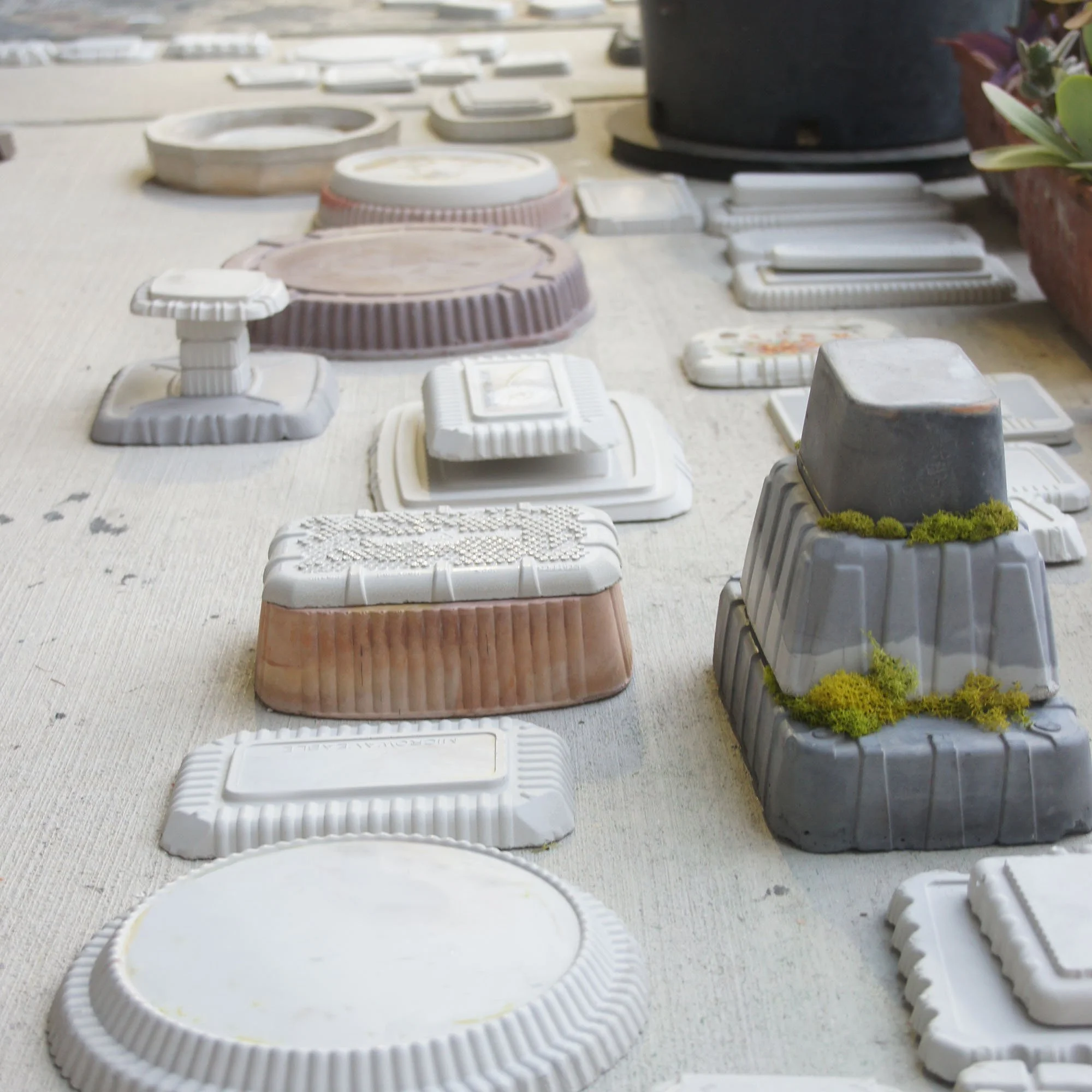
During pandemic confinement, Lockdown Diet began with a pile of plastic packaging left over from essential shopping. I started sorting the containers by their assigned uses: fruit, desserts, dairy, meats, prepared foods. What began as a record of our family’s diet became my first attempt to build an archive from domestic residue.
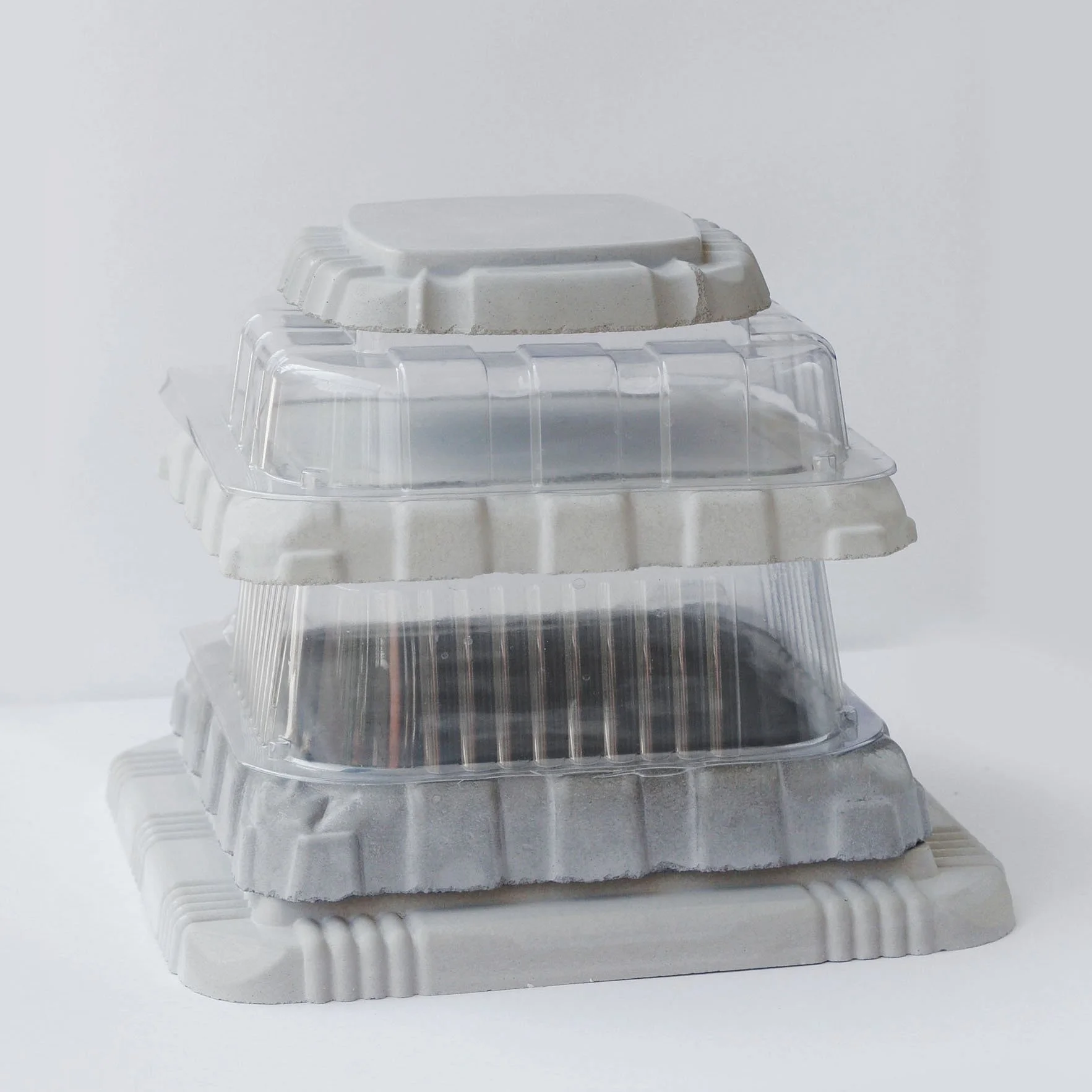
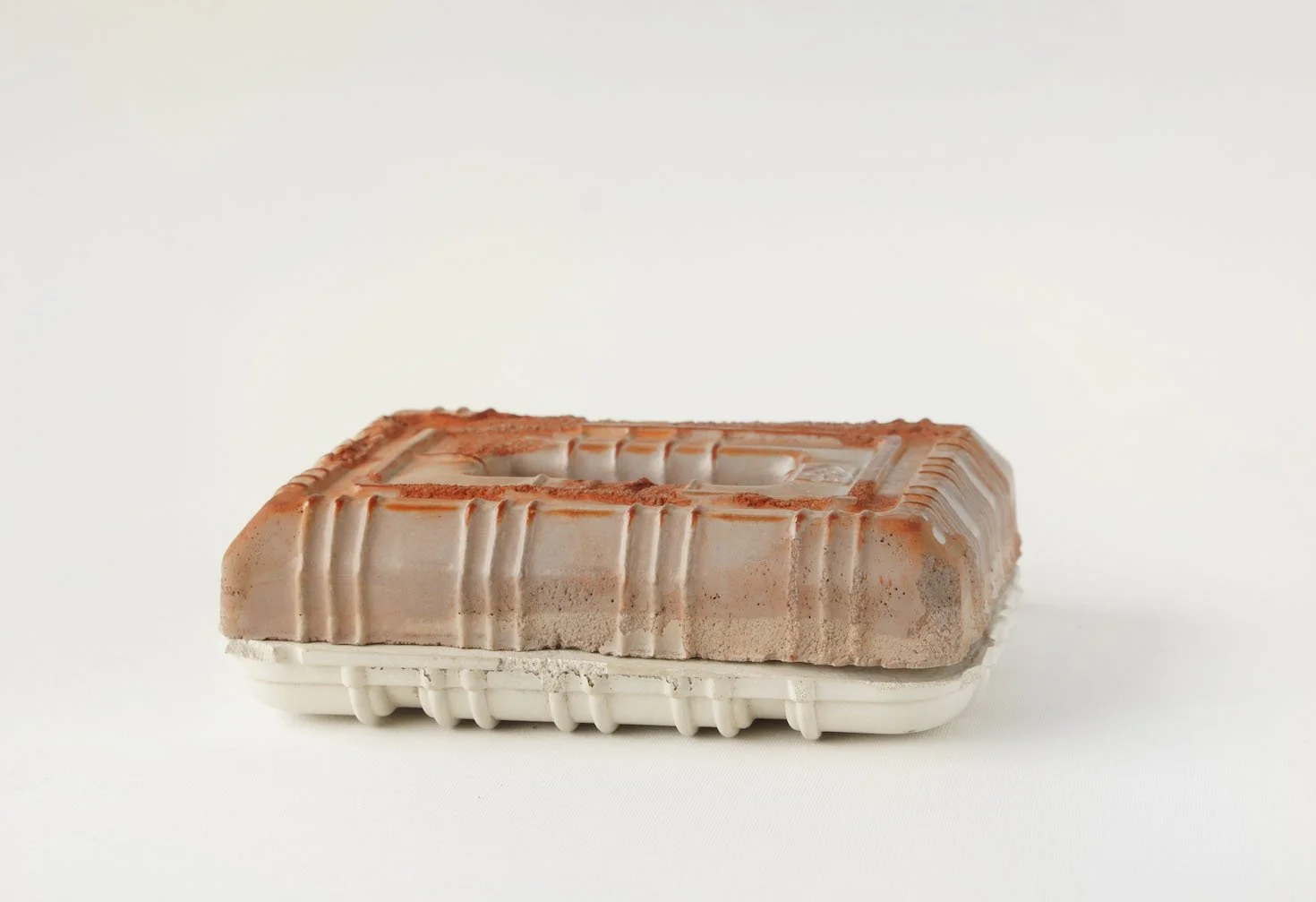
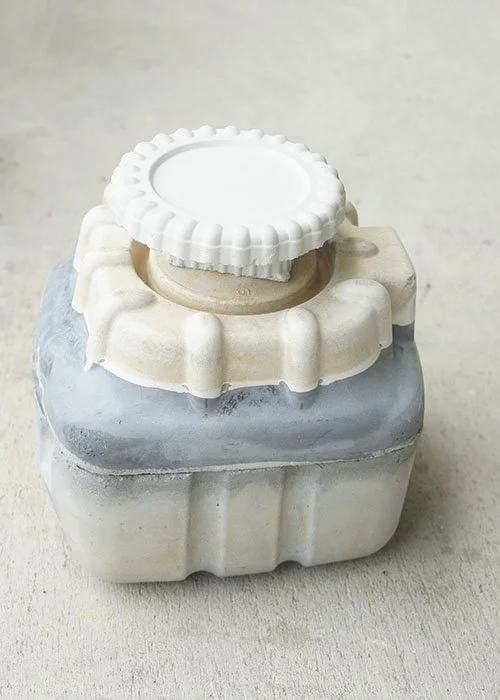
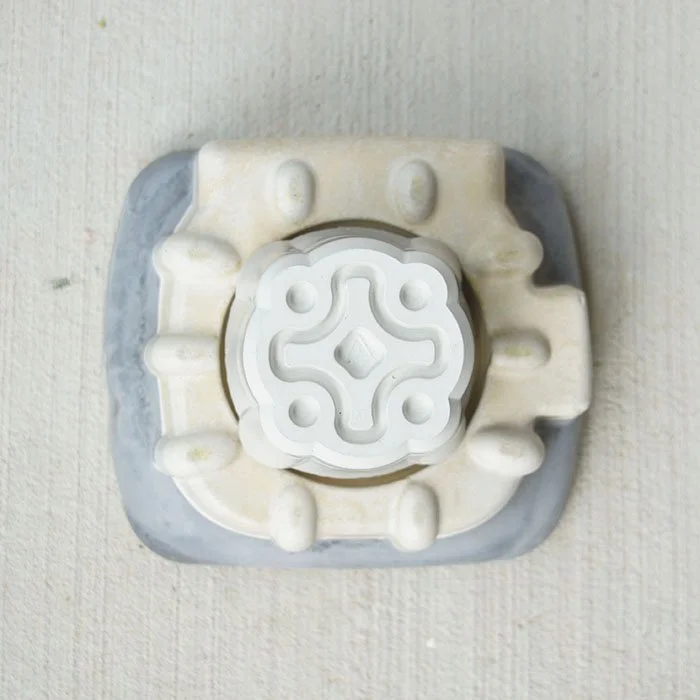
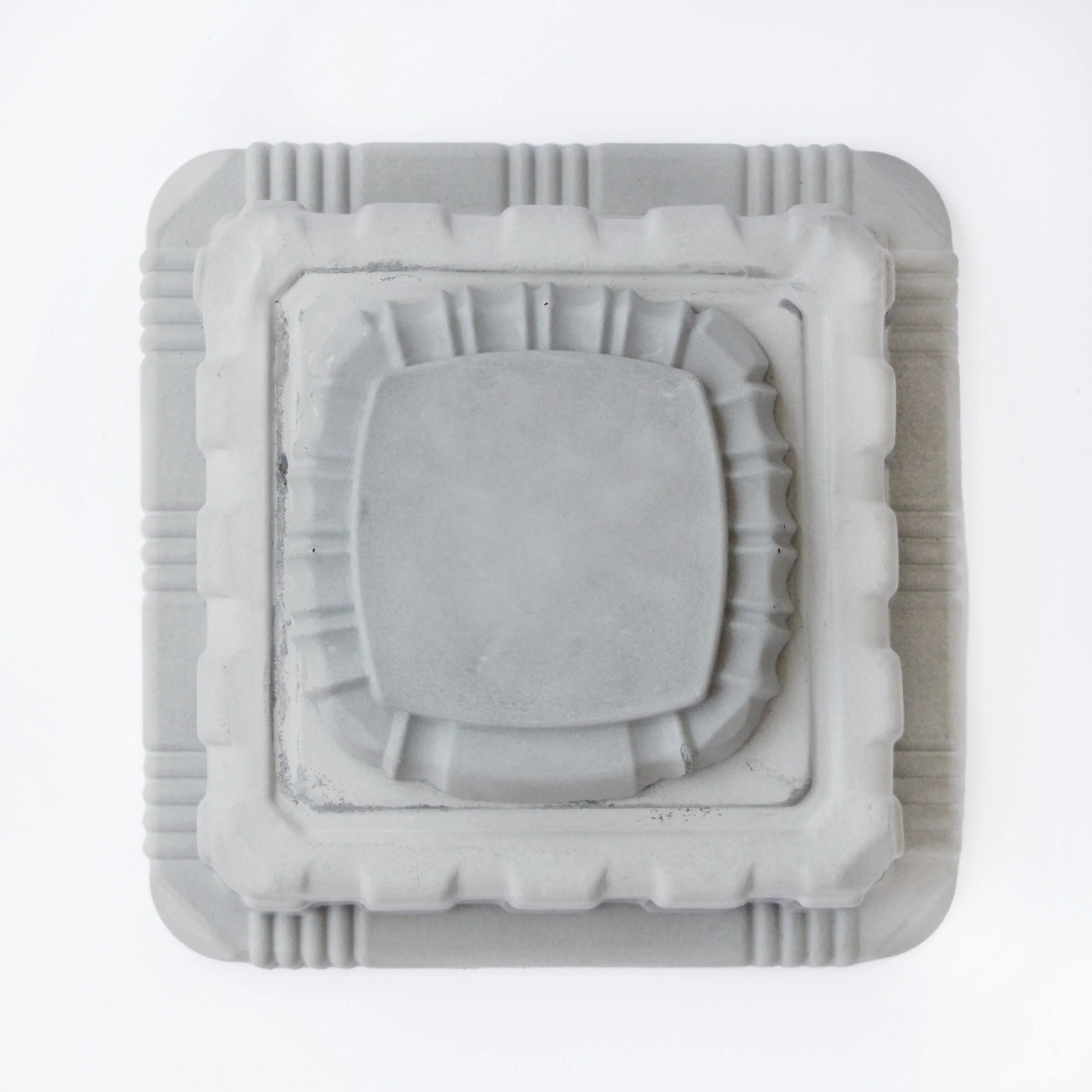
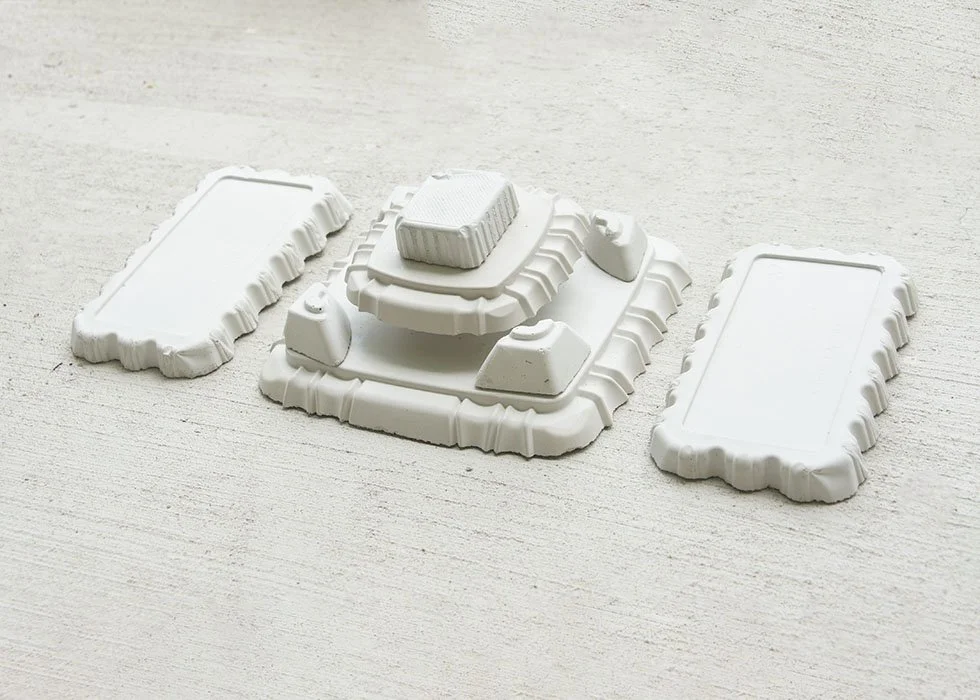
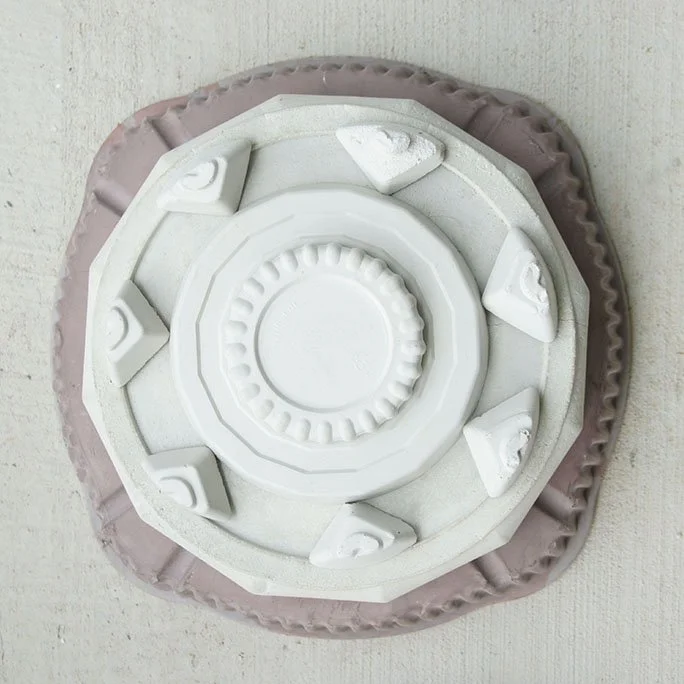
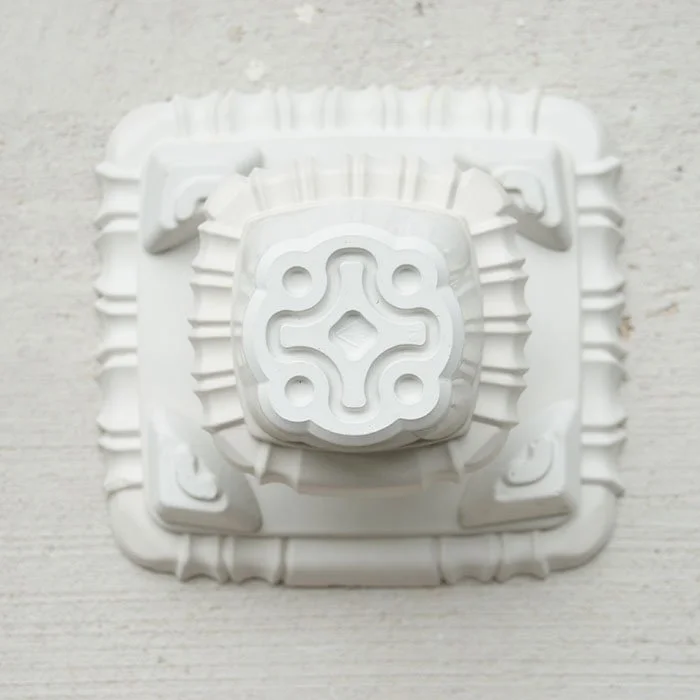
The forms quickly exceeded their function. Their fluted edges, dentil borders, cartouche-like frames, and molded inscriptions began to read like fragments of an inherited architectural language. These disposable containers carried echoes of temples, monuments, cornices, civic buildings, and ceremonial objects. In their plastic state, they offered a strange fantasy of permanence, order, refinement, and abundance — while being designed for immediate disposal.
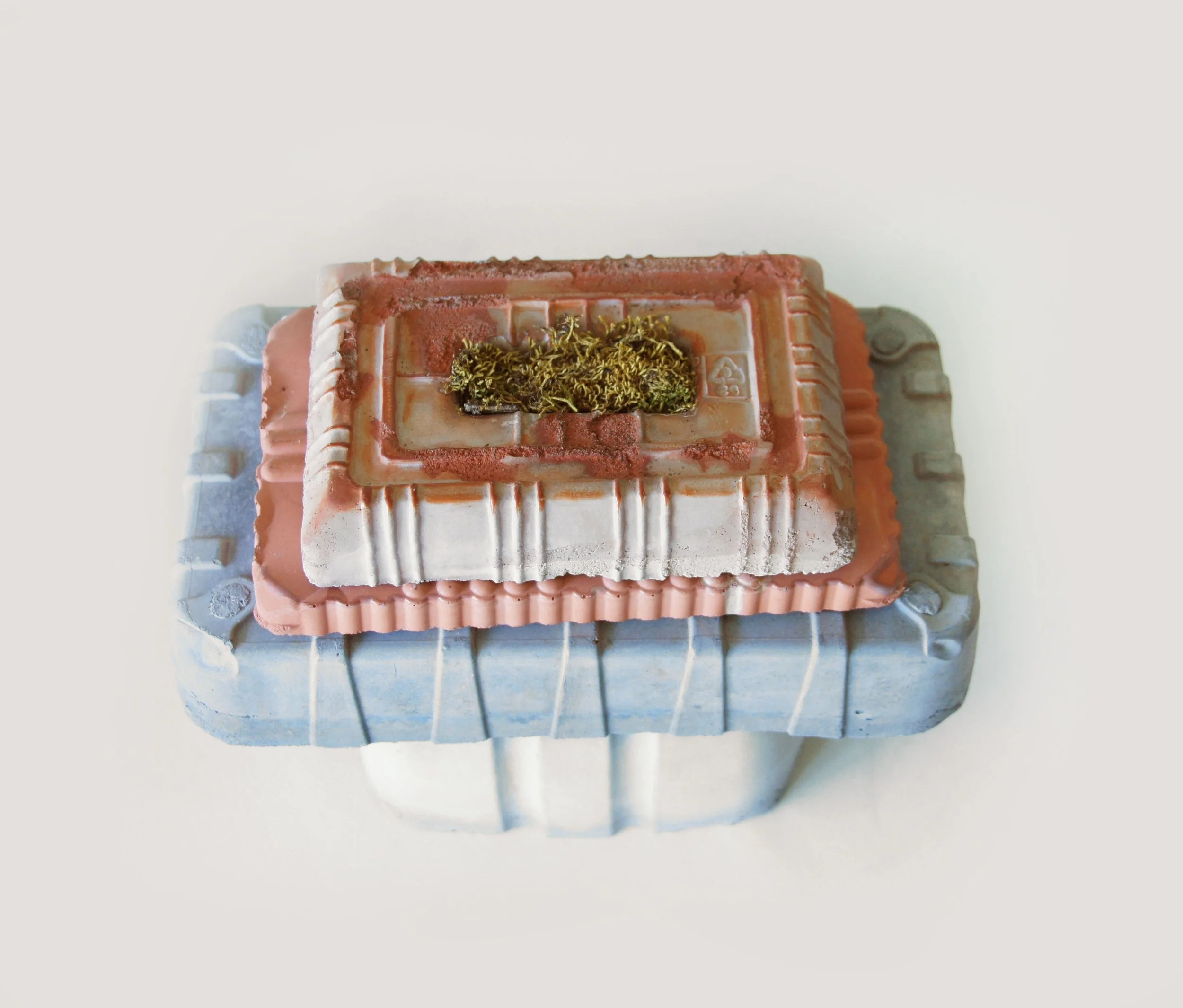
By casting them in cement, I make that contradiction literal. The disposable object becomes the architectural fragment it was pretending to be. What was meant to disappear becomes heavy, tactile, and strangely permanent.
The series treats packaging as a form of accidental writing. Ridges, labels, recycling marks, manufacturer codes, and ornamental details become glyphs in a domestic archive. In attempting to map my family’s pandemic diet, I found a new visual language for classification, memory, and cultural inheritance.
Lockdown Diet asks what values are transmitted through the smallest designed objects around us. What happens when the visual language of permanence is used to sell disposability? What kind of history is preserved in a fruit tray, a dessert lid, or a meat container? These works hold that absurd contradiction: the miniature monument, the disposable relic, the household archive.
This version has more air. It still has your critique, but it lets the contradiction do the work.
Ornamental Evidence
Fluting
Column-like grooves associated with classical architecture, rhythm, verticality, and monumentality.
Dentil
Repeated tooth-like blocks used in classical cornices; here they suggest counting, modularity, and historical repetition.
Cartouche
An ornamental frame historically used for inscriptions, emblems, or names; in the packaging, it becomes an empty field of displaced meaning.